

The roots of Christmas delve deep into the ancient practices of Norse Yule and Roman Saturnalia. As we celebrate the winter solstice on December 21st and embrace the inner hermit on the longest night of the year, let’s dive in to the roots of our beloved winter celebration.

The Norse Yule Tradition: Light and Odin
In the frost-kissed lands of Scandinavia, the Norse people marked the winter solstice with the grandeur of Yule. From December 21st to January, they welcomed the return of the sun by igniting colossal yule logs, their embers symbolizing the birth of new life. In the festivities of Yule, a time when all the gods are revered, special homage is paid to Odin, often affectionately referred to as Jólfaðr, the Yule Father.
Not to deny Saint Nicholas’s primary influence who gave to the poor during the 3rd century, but it is Odin of Norse mythology who was known for giving away gifts, like Santa. Odin was also known for his generosity and employing magical elves and dwarves with a specialized skill in crafting presents. The famed Mjölnir, Thor’s mighty hammer was one of Odin’s gifts. The Yule celebration was also linked to Odin’s mythical “Wild Hunt,” where he flew through the night sky on his magical flying 8-legged horse, Sleipnir.
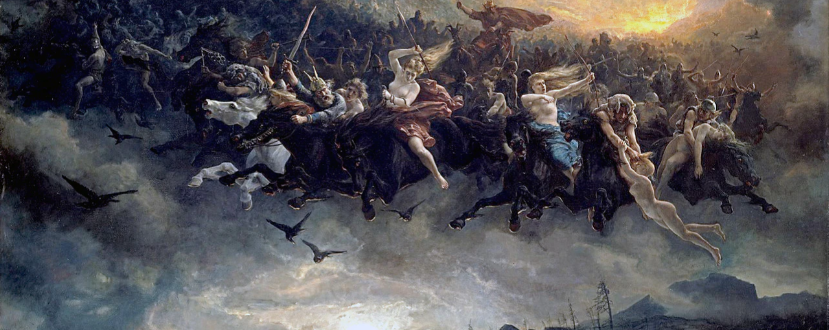
Nicolai Arbo’s painting, The Wild Hunt, 1872
Saturnalia: Roman Feasts, Gifts and Decorations
In the heart of ancient Rome, the Saturnalia season ushered in a time of unprecedented freedom. Romans hung greenery as a form of decoration, bringing in holly and berries to honour Saturn. Affluent Romans also bestowed gifts upon the less fortunate, challenging the social norms of the time. During this month-long festival of misrule, slaves became masters, and the city was filled with hedonistic abandon.
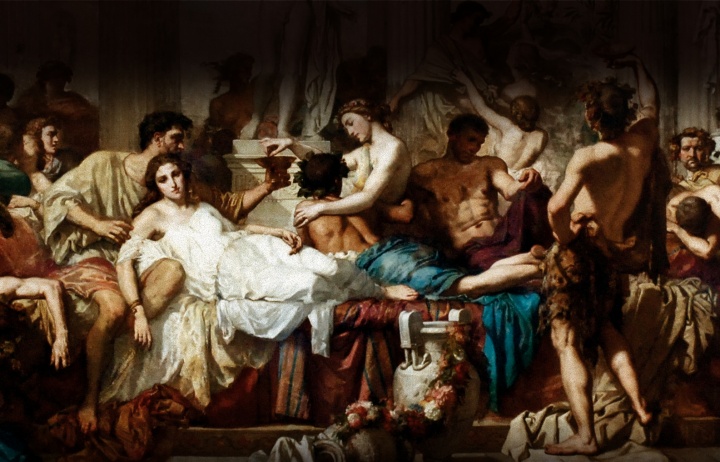
The celebration of Roman Saturnalia as depicted by Thomas Couture’s painting, The Romans of Decadence, 1847, Orsay Museum
Juvenalia and Mithras: Unveiling Lesser-Known Winter Solstice Festivals
Amidst the Roman festivities, Juvenalia stood as a joyous celebration of Rome’s children, highlighting the importance of family bonds. Simultaneously, the birth of Mithras, the god of the unconquerable sun on December 25th, held profound significance for some Romans.
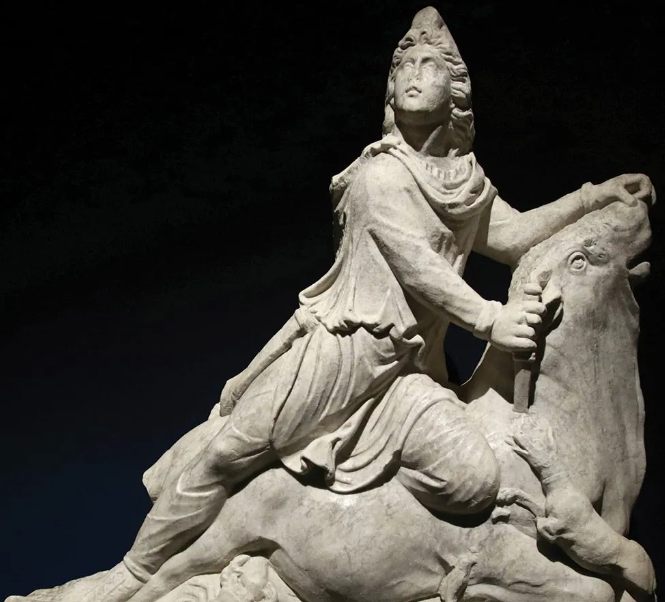
Sculpture of Mithras in his traditional Phrygian cap from Cordoba, Lebanon.
Fusion of Traditions
With time, the Christian holiday of Easter took center stage. However, in the fourth century, the Church officially recognized the birth of Jesus, choosing December 25th as the designated date. This decision, perhaps, aimed to intertwine and harmonize with the prevailing customs of the pagan Saturnalia.
Winter Solstice: A Time for Gratitude and Renewal
As winter blankets the world in its icy embrace, we find solace in the warmth of our homes, reflecting on the traditions passed down by our ancestors. Let this season be a time of reflection, renewal, and gratitude for the interconnectedness of our diverse histories.

